
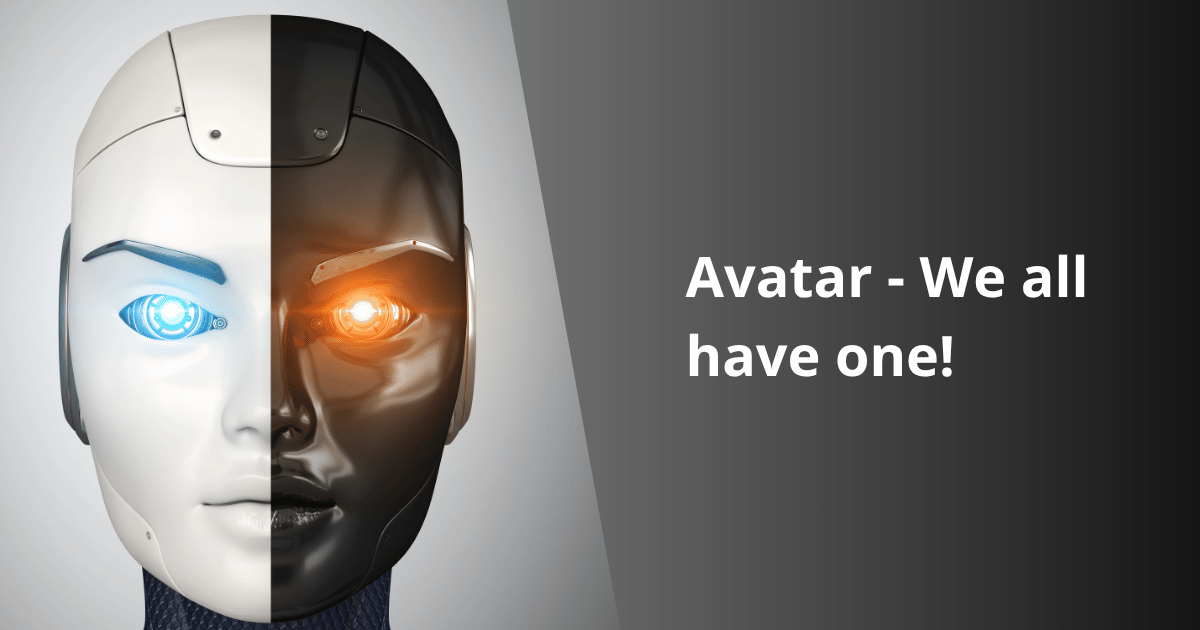
Avatar — We All Have One
Recently, I watched Avatar. Like millions of others, I admired its scale, imagination and technology. The film created another world so convincingly that, for a few hours, our own world looked almost normal.
That may have been its greatest special effect.
The film showed human beings entering artificial bodies and living through them. But as I watched it, I began to wonder whether this was really science fiction. We already do it every day.
We create bodies for society. We create faces for business. We create personalities for social media. We create identities for strangers. Then we enter these artificial versions of ourselves and call the performance “life”.
The blue creatures in Avatar needed advanced technology to inhabit another body. We only need a smartphone, a job title and a fear of being disliked.
We all have an avatar. The disturbing part is that, after wearing it for long enough, we forget who is wearing whom.
Born Human, Trained Otherwise
A child enters the world without a résumé, a personal brand or a five-year plan. It does not know whether it is successful, respectable, employable or properly networked.
It simply exists. Then society begins its work. The child is given a name, religion, nationality, school, social class and list of approved ambitions. Soon, it learns which behaviour earns praise and which creates discomfort.
Be obedient. Score well. Do not ask too many questions. Choose a respectable career. Earn more than your neighbour. Marry correctly. Buy a house. Produce children. Post photographs proving that everyone is happy.
By adulthood, the original human being is buried under several layers of social packaging. The packaging becomes so impressive that nobody remembers the product. We call this personality.
The word “personality” comes from persona—the mask worn by an actor. The old actor wore one mask at a time. Modern people maintain an entire collection.
We have one face for the family, one for friends, one for customers, one for competitors and one specially designed for people who may influence our next promotion. We do not merely change clothes according to the occasion. We change our values.
The Social-Media Avatar
Social media has industrialised the mask.
Earlier, we pretended before a small group of relatives, neighbours and colleagues. Technology has now allowed us to pretend before the entire planet.
Our online avatar is always energetic, informed, successful and deeply grateful. It reads important books, visits attractive places, loves its family, supports noble causes and drinks coffee beside laptops in tasteful surroundings.
It never suffers from constipation, envy, unpaid bills or uncertainty.
A person may be lonely at home, but online he is “celebrating another beautiful chapter”. A marriage may be collapsing in private while producing anniversary photographs of remarkable stability.
A professional may be terrified about losing his job, yet publish a post about “embracing uncertainty as a growth opportunity”.
We no longer experience life first and describe it later. We now ask whether an experience is worth having if it cannot be posted.
A meal is not eaten until photographed. A holiday is not enjoyed until strangers approve it. Grief is given a black-and-white picture.
Social media promised to connect us. It has certainly connected our insecurity to an audience.
It has also taught us a new form of arithmetic: our value is equal to the number of people who briefly notice us while waiting for something more interesting.
The Personal Brand
Once upon a time, brands were created for soap, toothpaste and motorcars. Then somebody looked at the human being and realised that here was another product waiting to be packaged.
Thus arrived the personal brand.
We are now advised to define our unique value, identify our target audience, develop a consistent voice and position ourselves in the marketplace.
In other words, become a detergent with emotions.
The personal-brand industry tells us to be authentic. But this authenticity must be carefully designed, professionally photographed and released according to a content calendar.
We are encouraged to “tell our story”. Naturally, the story must exclude confusion, failure without redemption, ordinary days and any opinion that may reduce engagement.
Our weaknesses are acceptable only after they have been converted into leadership lessons.
“I once suffered” is not useful. “I transformed suffering into a seven-step success framework” has commercial potential.
Even vulnerability now needs a marketing strategy.
People announce that they are “humbled” by awards, promotions and public praise. Humility, apparently, is an emotion best expressed through a photograph of the trophy.
We have become skilled at appearing modest while ensuring that nobody misses the achievement.
The personal brand does not ask, “Who am I?” It asks, “How should I be perceived?” That small difference contains an entire tragedy.
The Corporate Avatar
Nowhere is the avatar more polished than in corporate life.
A person enters an organisation as a human being. Soon, he learns to speak corporate language—a language designed to prevent reality from entering the building.
A problem becomes a challenge. A failure becomes a learning. Confusion becomes complexity. Cost-cutting becomes optimisation. Overwork becomes ownership. Fear becomes alignment.
Employees are not dismissed. Their roles are “made redundant”, as though the chairs arrived one morning and quietly voted against them.
The corporate avatar is confident, positive and passionate. It never says, “This target is absurd.” It says, “We may need to revisit the assumptions.”
It does not say, “Nobody understands this strategy.” It says, “We need greater strategic alignment.”
Corporate culture teaches people to hide their exhaustion and display enthusiasm. Employees attend meetings about wellness while answering emails during the meeting. They are advised to maintain work-life balance by leaders who send messages at midnight.
A manager may humiliate his team from Monday to Friday and post a leadership quote on Sunday. By Monday morning, the quote has received two thousand likes and the team has updated its résumé.
The modern corporation does not always ask employees to surrender their identity. It asks them to bring their “whole self” to work. This sounds generous. But the organisation usually wants the energetic, innovative and obedient parts. The tired, doubtful and morally uncomfortable parts should remain at home.
Retail Theatre
Retail has its own avatars.
The customer enters saying, “I am only looking.” This statement is often as accurate as a corporate forecast. He has already compared prices online, consulted three relatives and decided what he is willing to pay. But he must protect his avatar: the intelligent buyer who cannot be influenced.
The salesperson welcomes him warmly. He must appear helpful without appearing desperate, knowledgeable without challenging the customer and friendly without forgetting the monthly target.
He may say, “Please take your time, sir.” The manager’s eyes are saying, “Close the sale before he escapes.”
The customer asks whether the fabric is pure cotton. The salesperson says yes. The customer touches it thoughtfully, as if his fingers hold an advanced textile laboratory. Then begins the ancient retail dance of trust, doubt, discount and performance.
Both sides wear masks because both fear being exploited. The customer fears paying too much. The retailer fears selling too little. Human contact becomes negotiation.
And yet, the best retail experiences occur when both avatars briefly disappear—when the seller gives honest advice and the customer stops treating every conversation as a courtroom trial.
For a moment, business becomes human. Such moments are rare because sincerity is difficult to enter into the sales dashboard.
Society Prefers the Mask
Society is uncomfortable with the essential human being.
The essential person asks questions. Why must success look like this? Why must growth always mean more? Why should profit excuse cruelty? Why should popularity decide truth? Why must I become a brand before I am allowed to become myself?
Institutions do not enjoy these questions. Questions slow down machinery.
Society prefers roles: obedient student, efficient employee, loyal customer, respectable citizen and cheerful taxpayer. A role is predictable. A human being is not.
The more mechanical we become, the easier we are to manage. Machines do not question deadlines, suffer moral conflict or ask whether the meeting has any purpose. Human beings do.
Therefore, modern culture works hard to make people machine-like while using words such as passion, empowerment and belonging.
The perfect employee is expected to think independently, provided the conclusion matches management. The perfect citizen is free, provided he chooses from the approved options. The perfect online personality is authentic, provided authenticity does not make anyone uncomfortable.
Our avatars protect the system from the inconvenience of our humanity.
The Face Beneath
The solution is not to throw away every role. We must still be parents, professionals, customers, employers and citizens.
The problem is not that we wear masks. The problem is that we have started sleeping in them.
Evolution begins when we can observe the avatar without mistaking it for our essence.
A job title is useful, but it is not a soul. A social-media profile is visible, but it is not a life. A personal brand may attract attention, but attention is not love.
A company may call us family, but most families do not deactivate our access card after a quarterly review.
We must learn to perform our roles without becoming trapped inside them. We can work without worshipping the workplace. We can use social media without asking it to confirm our existence. We can build a reputation without converting ourselves into a product. We can succeed without losing the person who wanted success in the first place.
The real question is not whether we have an avatar. We all do. The question is whether, beneath the photographs, designations, opinions, achievements and rehearsed confidence, there is still someone alive.
Perhaps real evolution is not the creation of a better avatar. Perhaps it is the courage to switch it off.
And then, in the sudden darkness, meet the person who was there before the world started watching.