
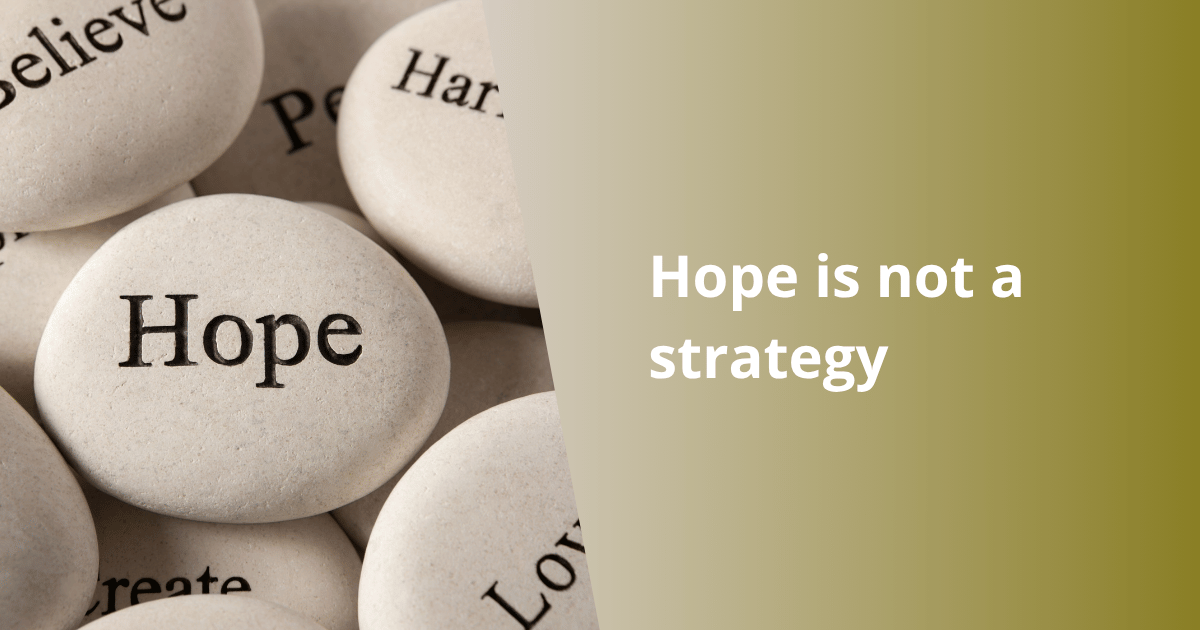
Hope Is Not a Strategy?
Nigeria was once described as one of the happiest nations on earth. Although changing economic and social realities may have weakened that reputation, the expression “suffering and smiling” still captures something remarkable about the Nigerian spirit.
It describes the ability to endure hardship without surrendering one’s humour, warmth, or hope. It is a quality that deserves admiration. Yet it also raises an uncomfortable question: when does resilience help a society move forward, and when does it merely help people tolerate what should never have been accepted?
Across Nigeria, one can witness extraordinary examples of human endurance.
Imagine a man pushing a wheelbarrow loaded with goods several times his own weight. The afternoon sun is unforgiving. Sweat runs down his face and soaks through his clothes as he manoeuvres through a crowded street. His work is physically exhausting, and the money he earns may barely support his family.
One might expect frustration to be written across his face. Instead, he exchanges jokes with another trader, laughs at a passing comment, and continues on his way.
That scene says something powerful about human behaviour. People do not survive difficult circumstances through physical strength alone. They also survive through relationships, humour, optimism, faith, and the ability to find small moments of happiness in otherwise harsh conditions.
These emotional coping mechanisms are not signs of ignorance or weakness. They are tools of survival.
However, every survival mechanism has a hidden danger. The same capacity that helps people endure a bad situation may also reduce the urgency to change it.
The Comfort Within Discomfort
For decades, many communities in Nigeria have experienced unreliable electricity. Fans, refrigerators, water pumps, computers, and medical equipment cannot reasonably be considered luxuries in a modern society. They are essential to health, education, productivity, and economic development.
Yet people have learned to adapt.
Families buy generators when they can afford them. Businesses install inverters or solar systems. Residents sleep through hot nights while joking about mosquitoes performing concerts around their ears. When electricity suddenly returns, even briefly, people celebrate with the familiar cry of “Up NEPA!”
The celebration is understandable. After hours or days of darkness, the restoration of power feels like a gift.
But electricity is not supposed to be a gift. It is a basic service.
This is where human adaptation becomes complicated. When people repeatedly experience poor service, they gradually adjust their expectations. What should be considered unacceptable begins to feel normal. A few minutes of electricity appear generous because the standard has fallen so low.
Psychologists sometimes describe a related tendency as adaptation. Human beings become accustomed to both comfort and discomfort. We learn to function within the conditions around us, even when those conditions are far from ideal.
Adaptation helps us survive. Evolution, however, requires more than survival.
Evolution begins when we ask whether the conditions to which we have adapted should continue to exist.
Happiness and the Desire for Change
This leads to a difficult management and social question:
Can people remain sufficiently motivated to demand improvement when they have become skilled at remaining happy under poor conditions?
Happiness itself is not the problem. No society should have to become permanently angry or miserable before it can progress. Humour, joy, and community are valuable human qualities.
The danger arises when happiness becomes passive acceptance.
There is an important difference between saying, “Life is difficult, but I will not allow it to destroy me,” and saying, “Life is difficult, but nothing can be done about it.”
The first response is resilience. The second is resignation.
They may look similar from the outside because both people continue with their lives. Internally, however, they are completely different. Resilience preserves the energy needed for action. Resignation slowly removes the belief that action is worthwhile.
A healthy society needs citizens who can smile through hardship while still insisting that the hardship be corrected. It needs people who can maintain hope without allowing hope to replace accountability.
When Waiting Becomes Normal
I once visited a commercial bank where a long line of customers was being served by a single teller. A simple withdrawal could take almost an hour.
The customers in the queue did not appear particularly agitated. A television behind the counter was showing a European football match. People discussed the game, debated the players’ performances, laughed with one another, and slowly moved forward as the line crawled along.
Their behaviour was admirable in one sense. They had found a way to turn an irritating delay into a social experience. Rather than spending an hour in visible anger, they used conversation and football to make the wait more bearable.
But the bank could also interpret their patience incorrectly.
Management might conclude that the customers were satisfied. Since few people complained, the branch might see no urgent reason to open another counter, improve staffing, introduce better technology, or redesign the service process. Silence can easily be mistaken for satisfaction.
This happens in many businesses. Customers may tolerate poor service not because they approve of it, but because they believe complaining will make no difference. They may smile politely, complete the transaction, and never return.
A retailer may see customers waiting patiently at the billing counter and assume everything is fine. In reality, some customers may be mentally deciding to shop elsewhere next time. A restaurant may notice diners joking while their food is delayed and conclude that the delay is acceptable. Yet those diners may later leave a poor review or quietly avoid the restaurant.
Businesses must therefore look beyond visible behaviour.
A smiling customer is not necessarily a satisfied customer. A quiet employee is not necessarily an engaged employee. A team that continues meeting deadlines is not necessarily functioning well. People often develop coping mechanisms long before leaders recognize that a system is failing them.
Good management does not ask only, “Are people managing?”
It asks, “Why are they being forced to manage this way?”
Coping Mechanisms in the Workplace
The same pattern appears inside organisations.
Employees often adapt to inefficient systems. They create unofficial spreadsheets because the company software does not work properly. They use personal messaging applications because official communication channels are slow. They remain late at the office because approval processes are badly designed.
Over time, these workarounds become part of the company culture.
Management may even praise such employees for their dedication and resourcefulness. Yet constant improvisation is not always evidence of a strong organisation. Sometimes it is evidence that the formal system has failed.
Imagine a retail store where the inventory records are unreliable. Experienced salespeople may know where products are kept and which items are probably available. They call colleagues, search the stockroom, and somehow complete the sale.
The customer leaves with the product, so the problem appears to have been solved.
But nothing has actually improved. The next customer will face the same delay. A new employee will struggle because the knowledge exists only in the minds of senior staff. Management may continue hoping that experienced employees will “handle it.”
That is not a strategy. It is dependence disguised as resilience.
A real strategy would involve correcting inventory records, improving product labelling, training employees, assigning responsibility, and measuring stock accuracy.
Hope says, “Our team will find a way.”
Strategy asks, “Why must our team keep finding a way around the same problem?”
Humour as Social Medicine
Nigerians have also mastered the art of using humour to discuss national problems. Jokes about electricity, traffic, government offices, banks, roads, fuel shortages, and public officials circulate quickly through conversations and social media.
Such humour performs an important social function. It reduces emotional pressure. It allows people to discuss painful realities without being overwhelmed by them. Satire can reveal truths that formal speeches often hide.
Humour is, in many ways, a form of social medicine.
But medicine should not be confused with a cure.
A joke about a pothole may help a commuter survive a frustrating journey, but it does not repair the road. A humorous story about corruption may expose the absurdity of the system, but it does not create accountability. Satire can awaken people, but it can also make dysfunction feel familiar and therefore less shocking.
When every failure becomes a joke, outrage may eventually lose its force.
The challenge is to allow humour to preserve our humanity without allowing it to weaken our demand for improvement.
Hope Needs Structure
Hope is essential. Without it, people stop trying. Entrepreneurs would not start businesses, employees would not pursue new opportunities, and societies would not imagine a better future.
But hope must be connected to action.
A struggling retailer may hope that sales improve during the festive season. A strategic retailer studies customer behaviour, improves merchandising, plans promotions, trains the sales team, manages inventory, and creates measurable targets.
A business owner may hope that customers remain loyal. A strategic owner regularly asks customers what they value, corrects service failures, improves product quality, and gives people a reason to return.
A government may hope that economic conditions improve. Strategy requires policies, competent execution, transparent measurement, and accountability when promises are not fulfilled.
The difference is simple:
Hope imagines the destination. Strategy builds the road.
Hope gives us emotional energy, but accountability gives that energy direction. Without accountability, hope becomes an excuse for waiting. Without action, optimism becomes a comforting story we tell ourselves while the same problems continue.
From Endurance to Evolution
Nigeria’s ability to survive hardship is extraordinary. The warmth, humour, faith, creativity, and adaptability of its people are genuine national strengths.
But strengths must evolve.
The next stage of social evolution is not to abandon happiness or resilience. It is to combine them with higher expectations. Nigerians should not have to choose between smiling and demanding better governance. Customers should not have to choose between patience and better service. Employees should not have to choose between loyalty and speaking honestly about broken systems.
True evolution occurs when coping is transformed into correction.
It happens when people stop celebrating basic services as favours and begin recognising them as standards. It happens when businesses stop admiring employees for surviving inefficient systems and begin redesigning those systems. It happens when citizens move beyond hoping that leaders will improve and begin demanding evidence, transparency, and results.
Hope should remain alive. It should inspire us, encourage us, and remind us that tomorrow can be better than today.
But hope cannot carry the entire burden of progress.
For individuals, organisations, and nations, hope must be supported by action, measurement, responsibility, and zero tolerance for repeated failure.
We may continue smiling. We may continue joking. We may continue believing in a better tomorrow.
But we must also plan, question, participate, and hold those in authority accountable.
Because hope can begin a journey. It cannot be the strategy that completes it.