
Emotions in the Workplace!
We like to believe that organizations are rational places.
They have policies, processes, reporting systems, performance indicators, budgets and enough spreadsheets to prove that every decision has been carefully considered. There are meetings to prepare for meetings, dashboards to explain other dashboards, and presentations in which emotions are represented by green, amber and red circles.
Yet beneath this impressive architecture of logic, every organization is powered by something far less orderly: human emotion.
Organizations are emotional places because they are filled with human beings. People arrive carrying ambition, fear, pride, insecurity, jealousy, hope, disappointment and, occasionally, homemade lunch. These emotions influence how employees perform, how managers lead, how teams cooperate and how customers decide whether to buy.
A customer may claim that he purchased a premium suit because of the fabric quality, stitching and value for money. In reality, he may have bought it because the mirror made him feel ten years younger and considerably more important.
An employee may say she resigned because she found a better career opportunity. The truth may be that her manager publicly dismissed her suggestion for the fifth time and then presented the same idea two weeks later as his own strategic insight.
Logic writes the official report. Emotion supplies the real reason.
The Invisible Structure of an Organization
We often think organizational structures are created through reporting lines, job descriptions and hierarchy charts. But another structure exists beneath the official one: the emotional structure.
This structure tells employees whom they can trust, whom they must avoid, when they may speak honestly and when silence is the safest contribution to a meeting.
Every workplace develops rules about emotional display. You may be frustrated, but not visibly frustrated. You may be excited, but not so excited that senior management suspects you are after someone’s job. You may disagree, but only in a manner that sounds remarkably like agreement. You may be disappointed with your appraisal, but you must receive the news with maturity, gratitude and the facial expression of someone who has just been awarded a national honour.
These unwritten rules become organizing forces. They shape behaviour more powerfully than many official policies.
A company may proudly announce an “open-door policy,” but employees quickly learn whether the door is genuinely open or merely left unlocked for decorative purposes. They observe what happens to the person who walks through it with an uncomfortable truth.
If that person disappears from important meetings, everyone receives the message. No circular is required.
Leadership Is Largely Emotion Management
A large part of leadership is the management of emotion—one’s own emotions and those of others.
The best leaders do not eliminate emotion from the workplace. They understand it, interpret it and channel it productively.
A leader entering a tense room affects the emotional temperature before speaking a word. A calm response during a crisis can give a team confidence. A sarcastic remark can destroy weeks of motivation. An honest acknowledgement of uncertainty can build more trust than a fifty-slide presentation titled Our Journey Towards Assured Success.
Employees rarely remember every instruction given by a manager. They remember how the manager made them feel when they made a mistake, offered an idea or faced a personal difficulty.
Inspirational leadership, therefore, is not only about vision. It is also about emotional impact. Unfortunately, many organizations continue to promote people almost entirely for technical ability.
A brilliant salesperson becomes a regional manager. A skilled engineer becomes a department head. A talented accountant becomes the leader of fifty people whose feelings cannot be entered into a ledger.
The promotion is announced with great enthusiasm. Six months later, the organization begins wondering why the team has become silent, defensive and unusually interested in job portals.
Technical competence may qualify someone to manage work. It does not automatically qualify that person to manage human beings.
A manager who cannot control anger, handle disagreement or recognize fear can create an emotional virus that spreads across the organization. One bad mood at the top can travel through departments faster than an official communication.
The CEO shouts at the director. The director humiliates the manager. The manager scolds the supervisor. The supervisor attacks the salesperson. The salesperson then explains to the customer that the product is “out of stock,” although it is clearly visible on the shelf.
This is how organizational culture finally reaches the consumer.
Decisions Are Emotional—Logic Arrives Later
We proudly describe ourselves as rational decision-makers. Yet much of human decision-making begins emotionally.
We feel attraction, fear, trust, irritation or excitement. Then logic is invited to prepare the supporting documentation.
A company may acquire another business because the numbers appear attractive. But somewhere beneath the financial language may lie ambition, rivalry or the chief executive’s desire to be featured on the cover of a business magazine.
A retailer may continue stocking a slow-moving brand because he has carried it for twenty years. The decision is described as loyalty to customer demand. In reality, it may be nostalgia wearing a tie.
A manager may reject an employee’s proposal because it is “not strategically aligned.” What he may actually mean is, “I did not think of it.”
This does not mean that emotions are bad.
Emotions help us assess risk, understand people and respond quickly. Intuition itself is often experience speaking through emotion before the conscious mind can explain it. The danger begins when we deny the emotional basis of our decisions. An unexamined emotion can disguise itself as professional judgement.
Fear may call itself caution. Ego may call itself leadership. Jealousy may call itself quality control. Indecision may call itself the need for additional data.
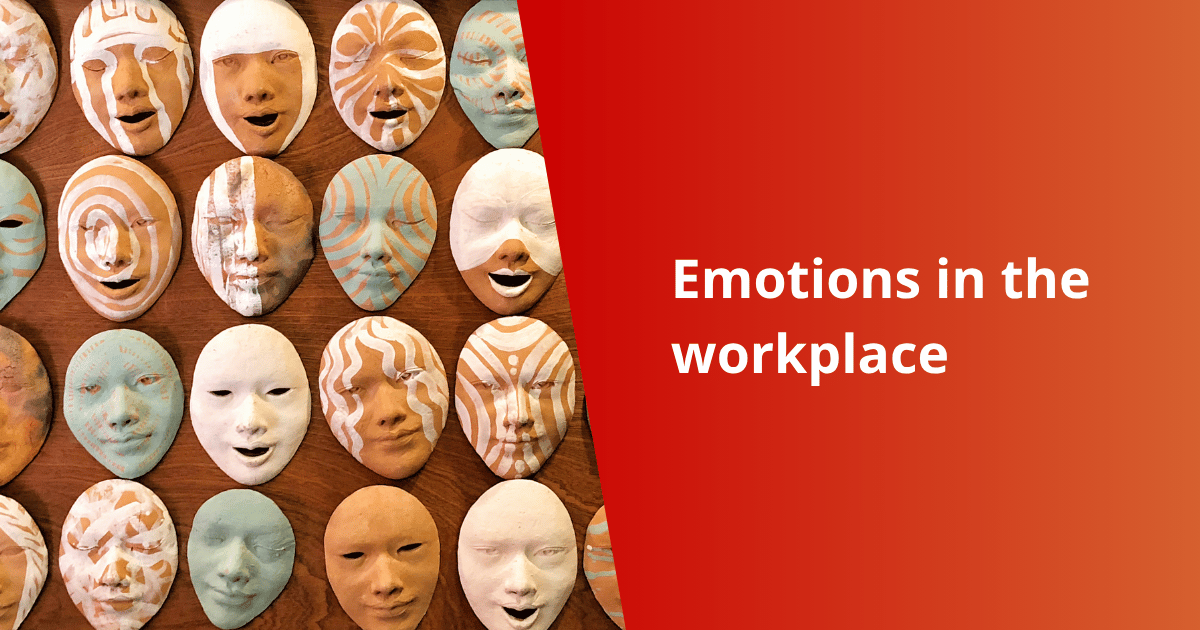
The Great Corporate Mask
Many organizations expect employees to manage emotions by hiding them.
Employees are encouraged to remain “professional,” which often means displaying neither excessive unhappiness nor inconvenient happiness. Negative emotions must be masked because they may disturb the workplace. Positive emotions must also be controlled because too much enthusiasm may look immature.
The ideal employee is expected to appear energetic but not excitable, confident but not threatening, ambitious but not impatient, honest but not brutally honest, and emotionally intelligent enough to understand everyone while requiring no understanding in return.
This is especially visible in customer-facing roles.
A retail employee may be expected to smile at a customer who has unfolded twenty shirts, rejected all of them, questioned the pricing, criticized the lighting and finally announced, “I was only looking.”
The employee must remain gracious. Management calls this customer service.
The employee may privately call it spiritual training.
Airline staff, hotel employees, receptionists, salespeople and call-centre executives perform what psychologists describe as emotional labour. They regulate their expressions to produce a desired feeling in the customer.
Some degree of emotional regulation is necessary. A workplace cannot function if every irritation becomes a public performance. But constant masking has a cost. When employees are repeatedly required to pretend that everything is fine, the organization loses access to valuable information.
Frustration may indicate a broken process. Anxiety may reveal unclear priorities. Anger may point to unfair treatment. Silence may signal that people have stopped believing it is safe to speak.
A company that suppresses every negative emotion may appear peaceful, but so does a showroom after closing time. Nothing is moving because nobody is participating.
Emotional Intelligence Cannot Be Outsourced
Emotion management is rarely taught formally at work. Most people learn by watching others.
They observe how senior leaders react to criticism, how managers behave under pressure and how mistakes are treated.
If the leader responds to bad news by attacking the messenger, employees soon learn to improve the news rather than the situation.
If vulnerability is punished, confidence becomes theatre. If disagreement damages careers, meetings become ceremonial gatherings where everyone supports decisions already made elsewhere.
Executive coaches and organizational psychologists now offer programs on emotional intelligence, empathy, resilience and difficult conversations. Some are genuinely useful. Others teach participants to breathe deeply before returning to the same toxic reporting structure.
A two-day workshop cannot repair a culture that rewards aggression, hides mistakes and promotes managers solely for delivering numbers. Emotional intelligence must be supported by accountability.
Leaders should be evaluated not only on what they achieve but also on what they create around them. Do their teams grow or shrink emotionally? Do people bring problems early, or hide them until they become disasters? Do employees feel respected, or merely managed? These questions matter because fear can produce short-term obedience, but rarely long-term excellence.
Emotion Is Also a Business Asset
Understanding emotion is not only good for employees; it is good business.
Customers do not simply purchase products. They purchase confidence, belonging, convenience, recognition and hope.
A fabric retailer does not merely sell cloth. He may be helping a young man feel confident at his first interview, a father look dignified at his daughter’s wedding or a professional feel prepared for an important presentation.
A restaurant does not merely sell food. It sells comfort, celebration and memory.
A bank does not merely sell financial products. It sells the feeling of security—sometimes with enough paperwork to make insecurity appear simpler.
Strong brands understand these emotional dimensions. Great leaders do too.
The organizations most likely to succeed will not be those that eliminate emotion, but those that recognize it without becoming ruled by it. They will create workplaces where people can disagree without fear, express concern without being labelled negative, celebrate without embarrassment and make mistakes without immediately preparing their résumés.
Emotions in the workplace are not distractions from business. They are part of the business.
Every strategy is eventually executed by people. Every customer relationship is shaped by feeling. Every culture is built through thousands of emotional interactions that no annual report can fully capture.
The future will belong to leaders who can read these invisible forces—leaders who understand that people do not leave their emotions at the office entrance along with their umbrellas.
After all, the organization may own the building, the brand and the balance sheet. But emotion decides what happens inside them.